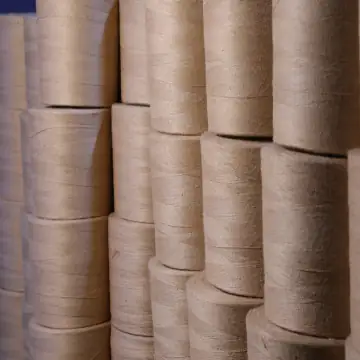
Jute yarn is one of the most versatile and eco-friendly natural fibres available today. Whether you're a textile mill, a macramé brand, a rope manufacturer, or a craft supplier, understanding jute yarn — its types, grades, and sourcing — can make a significant difference to your product quality and margins.
What is Jute Yarn?
Jute yarn is produced from the fibres of the jute plant (Corchorus olitorius or Corchorus capsularis), primarily grown in the Ganges Delta region of West Bengal, India and Bangladesh. The raw jute stalks are retted (soaked), stripped, and spun into yarn of varying thicknesses and strengths.
Known as the "golden fibre" of India, jute is 100% biodegradable, compostable, and one of the most affordable natural fibres globally — making jute yarn an increasingly popular choice as brands move away from synthetic alternatives.
Types of Jute Yarn
Jute yarn is available in several forms depending on the application:
1. Raw Jute Yarn
Unprocessed yarn spun directly from jute fibre. It retains its natural golden-brown colour and slight roughness. Most commonly used in weaving, rope making, and industrial packaging. It is the most affordable type.
2. Twisted / Plied Jute Yarn
Multiple strands of yarn are twisted together to increase strength. Available in 2-ply, 3-ply, 4-ply and higher counts. Used in rugs, baskets, macramé, and heavy-duty bags. The ply determines the thickness and load-bearing capacity.
3. Bleached Jute Yarn
Treated to lighten or fully whiten the natural golden colour. Popular for decorative applications, home décor textiles, and fashion accessories where a neutral or white base is needed for dyeing.
4. Dyed Jute Yarn
Available in a wide range of colours using natural or synthetic dyes. Widely used by craft brands, macramé artists, and lifestyle product manufacturers across Europe and North America.
5. Softened Jute Yarn
Processed with softening agents to reduce the natural coarseness of jute. Used in applications where the yarn may come into contact with skin — such as wearable fashion items and some home textiles.
Jute Yarn Counts — Understanding the Numbers
Yarn thickness in jute is measured in lbs per spindle (traditional jute measure). In jute, the lower the count, the finer and thinner the yarn; the higher the count, the thicker and heavier. Common counts used in manufacturing:
- 4 lbs / 6 lbs — Very fine, thin yarn; used for fine weaving and fashion applications
- 8 lbs / 10 lbs — Medium-fine; used for bags, macramé, general craft
- 12 lbs / 16 lbs — Medium-thick; used for rugs, baskets, bag handles
- 20 lbs+ — Heavy, thick yarn; used for rope making, industrial packaging, coarse weaving
Key Uses of Jute Yarn
- Textile mills — weaving jute fabric, hessian, and blended fabrics
- Rope and twine manufacturers — industrial and agricultural rope
- Rug and carpet manufacturers — weft and warp yarn for handwoven rugs
- Macramé and craft brands — wall hangings, plant hangers, jewellery
- Basket and bag manufacturers — structure and weave material
- Packaging industry — eco-friendly baling and bundling twine
- Agriculture — biodegradable plant ties, erosion control mesh
How to Buy Jute Yarn in Bulk from India
India — particularly West Bengal — is the world's largest producer of jute yarn. Buying direct from an Indian manufacturer like Ridhi Sidhi Overseas gives you significant cost advantages over purchasing through importers or trading companies in the UK or Europe.
Steps to place a bulk order:
- Define your specification — count, ply, colour (natural/bleached/dyed), and quantity
- Request a sample — always test a sample before committing to a full order
- Get a quote — pricing depends on quantity, count, and any processing required
- Confirm MOQ — minimum order quantities vary by product type
- Arrange shipping — your supplier should provide export documentation if shipping internationally
Need Jute Yarn for Your Business?
Ridhi Sidhi Overseas is a specialist jute yarn manufacturer based in Kolkata and Delhi, India. We supply textile mills, craft brands, and industrial buyers across India and internationally.
Request a Free SampleWhy Choose Indian Jute Yarn?
India produces over 75% of the world's jute. West Bengal alone has hundreds of jute mills with generations of expertise. Buying from an Indian manufacturer means:
- Direct access to the raw material source — lowest price point
- Wide range of specifications available in one location
- Established quality grading systems (IJMA standards)
- Flexible bulk and custom orders
As global demand for sustainable materials continues to rise, jute yarn is increasingly in demand from brands in the UK, Germany, France, the US and Australia. Now is a great time to build a direct supply relationship with an Indian manufacturer.